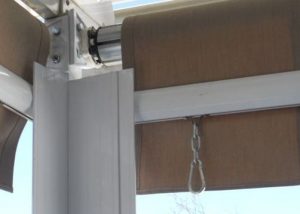
Why Side Rails for Roller Blinds Make a Significant Difference
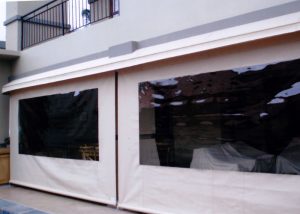
Without side rails, a canvas or PVC roller blind is essentially a free-hanging panel that can move significantly in the wind. In mild conditions this is not a major issue, but in exposed locations or during high wind events, an unsecured blind can flap loudly, place stress on the mounting hardware, and allow significant air and water infiltration through the moving edges. Side Rails for Roller Blinds address all of these issues by constraining the blind within a fixed track that holds it in position regardless of wind conditions.
Side Rails for Roller Blinds and Improved Weather Sealing
The most immediate practical benefit of side rails is the improvement in weather sealing they provide. When a blind hangs freely, there is always a gap between the blind edge and any adjacent surface. This gap allows wind-driven rain, dust, and insects to enter the enclosed space even when the blind appears to be fully lowered. Side rails eliminate this gap by holding the blind edge in close proximity to the rail channel, creating a seal that is significantly more effective than a free-hanging blind.
Applications Where Side Rails Are Most Valuable
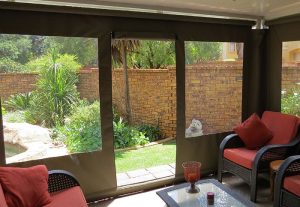
Side Rails for Roller Blinds are most valuable in exposed locations that experience regular or strong winds. Coastal properties, elevated installations, and open-plan outdoor areas are all environments where free-hanging blinds perform poorly without the additional stability that side rails provide. They are also particularly useful in commercial settings where the blind is deployed frequently and where wind performance and appearance standards are higher.
Structural Integration with Your Installation
Side rails are designed to integrate cleanly with the vertical elements of your outdoor structure. They mount to existing posts, walls, or columns and are manufactured to suit the specific dimensions of your blind installation. The rail profile is selected to match your blind edge configuration, ensuring the blind runs smoothly within the track without binding or resistance throughout its full range of motion.